Assistant Professor of Finance
University of Texas at Dallas

Naveen Jindal School of Management

Fellow, Wharton Impact, The Wharton School, The University of Pennsylvania

meier@utdallas.edu
SSRN-Page
Google Scholar Profile
LinkedIn Profile

Curriculum Vitae

I am on the 2026-27 job market, looking for a position with a 2027 start date. I will be at the European Finance Association meeting for a presentation and discussion.

Jean-Marie Meier is Assistant Professor of Finance at the University of Texas at Dallas. He is a Fellow of Wharton Impact at the Wharton School at the University of Pennsylvania, where he was a Visiting Assistant Professor of Finance. He was Finalist for the Jindal Faculty of the Year (Undergraduate) Award (teaching award). He won the Best Paper in Corporate Finance Award at the SFS Cavalcade North America and the Klaus Liebscher Award by the Oesterreichische Nationalbank (the Austrian Central Bank). He received a Ph.D. in Finance from London Business School and an MSc Finance and BSc in Economics from the University of Mannheim in Germany.

Main topics:    International finance, mergers & acquisitions, innovation & technology transfer

Other topics:   Geoeconomics, tax havens, corporate taxation, fire sales, corporate bankruptcy, environmental, social, and governance (ESG) issues
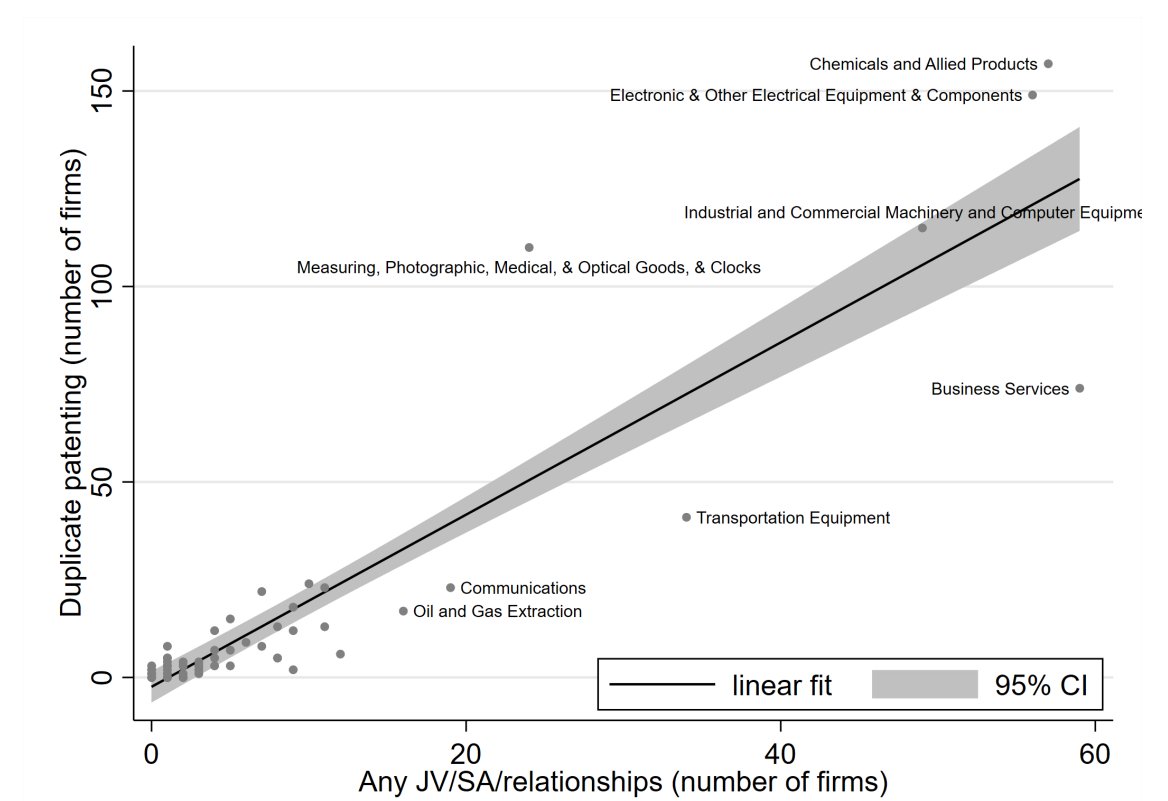
Cross-Border Property Rights and the Globalization of Innovation

with Bo Bian and Ting Xu, 2025, Journal of Financial and Quantitative Analysis, 60(5), 2159–2193, JFQA Version

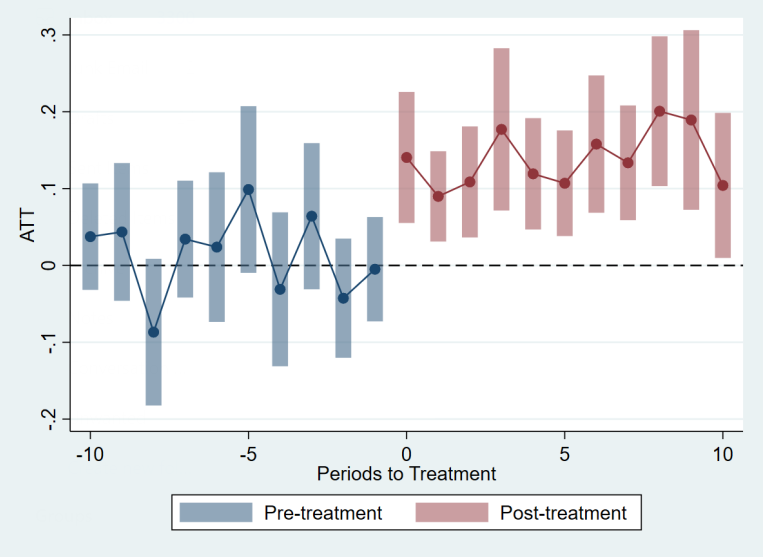
Strong cross-border property rights are an important driver of the globalization of innovation.

Media: UVA Darden

Abstract [+]We identify strong cross-border property rights as a driver for the globalization of innovation. Using 67 million patents from over 100 patent offices, we construct novel measures of the three stages of innovation diffusion: adoption, sourcing, and collaboration. Exploiting staggered bilateral investment treaties (BITs) as shocks to cross-border property rights, we show that signatory countries increase technology adoption and sourcing from each other; they also increase R&D collaborations. The results are particularly strong for countries with weak domestic institutions and technologies with high imitation risks. Increases in R&D-related foreign investments explain most of the results.

The Impact of Institutions on Innovation

with Alexander Donges and Rui C. Silva, 2023, Management Science, 69(4), 1951–1974, Online Appendix, replication files, MS Version

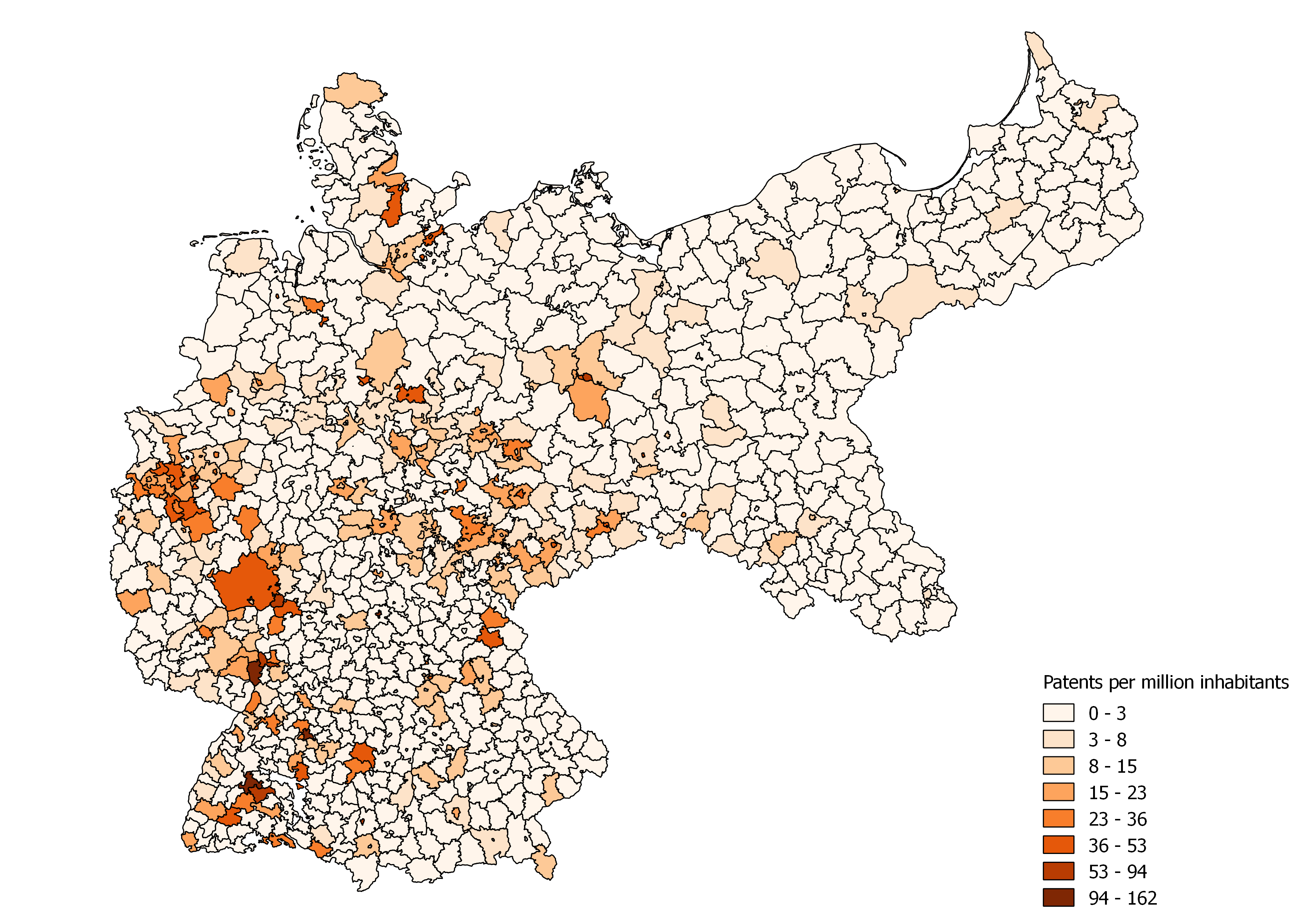
Inclusive institutions are a first-order determinant of innovation.

Featured Article

Grants and stipends:
-Deloitte Institute for Innovation and Entrepreneurship research grant
-Deloitte Institute for Innovation and Entrepreneurship stipend

Abstract [+]We study the impact of inclusive institutions on innovation using novel, hand-collected, county-level data for Imperial Germany. We use the timing and geography of the French occupation of different German regions after the French Revolution of 1789 as an instrument for institutional quality. We find that the number of patents per capita in counties with the longest occupation was more than double that in unoccupied counties. Among the institutional changes brought by the French, the introduction of the Code civil, ensuring equality before the law, and the promotion of commercial freedom through the abolition of guilds and trade licenses had a stronger effect on innovation than the abolition of serfdom, which increased labor market mobility, and agricultural reforms that broke up the power of rural elites. The effect of institutions on innovation is particularly pronounced for high-tech innovation, suggesting that innovation might be a key channel through which institutions ultimately affect economic growth. Our findings highlight inclusive institutions as a first order determinant of innovation.

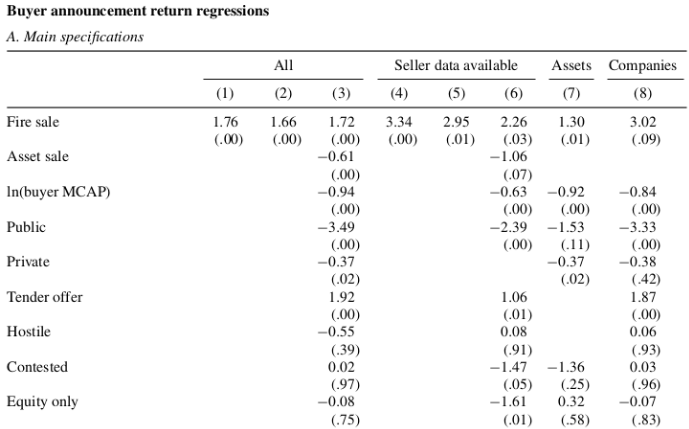
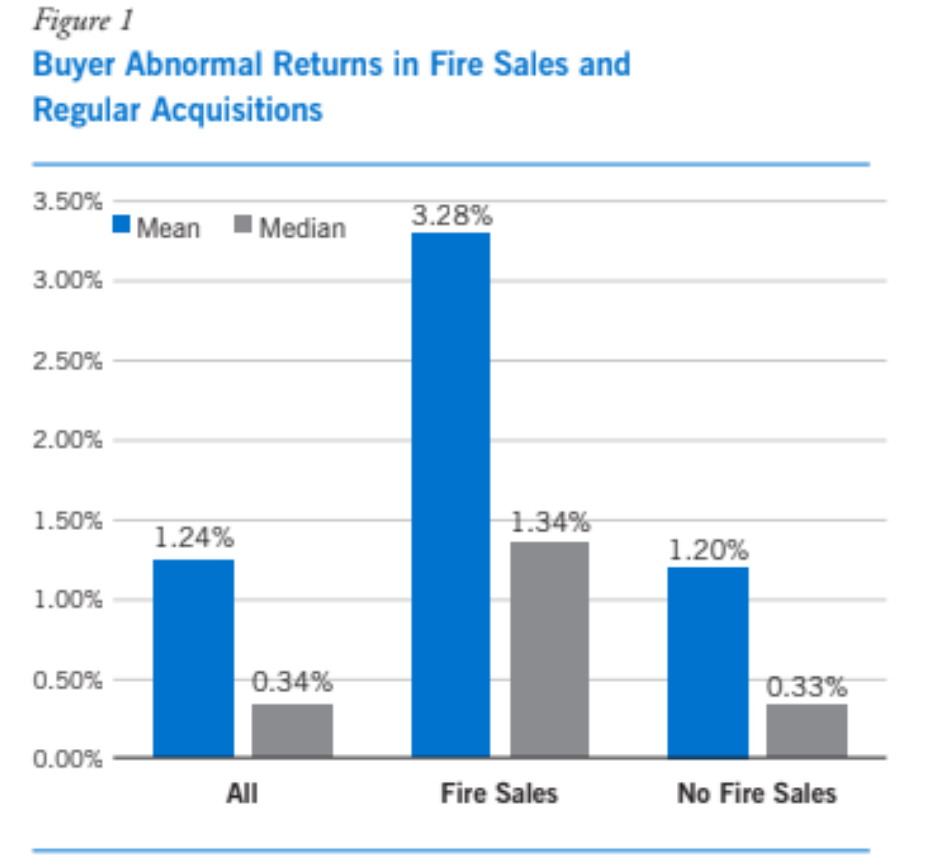
The Bright Side of Fire Sales


with Henri Servaes, 2019, Review of Financial Studies, 32(11), 4228–4270, RFS Version   

Fire sales are not as bad as widely thought since buyers gain substantially from them and the externalities of fire sales for other stakeholders are limited. 

Abstract [+]Firms that buy assets in fire sales earn excess returns that are two percentage points higher than in regular acquisitions. The mechanism behind this result is the reduced bargaining power of the seller. We find no difference in real effects or in the combined returns for buyers and sellers between fire sales and regular acquisitions, suggesting that the quality of the match is similar in both types of transactions. The externalities of fire sales for other stakeholders are limited. These results indicate that the welfare losses associated with fire sales are smaller than previously thought.

Do Consumers Care About ESG? Evidence from Barcode-Level Sales Data

with Henri Servaes, Jiaying Wei and Steven Chong Xiao, revise and resubmit, Journal of Finance.

Awards:
-Finalist for the John L. Weinberg/IRRCi Best Paper Award

Conferences*: 4th Annual Boca-ECGI Corporate Finance and Governance Conference, Annual Convening of the Wharton ESG Initiative, China International Conference in Finance, CEPR European Summer Symposium in Financial Markets (Gerzensee), Conference on Financial Economics and Accounting, Conference on CSR, the Economy, and Financial Markets, EFA, NFA, UT Dallas Ann & Jack Graves Foundation Conference, University of Delaware Weinberg Center/ECGI Corporate Governance Symposium, Drexel University Corporate Governance Conference, FIRS, MFA

Abstract [+]Using granular barcode-level sales data from retail stores, we show that environmental and social (E&S) ratings positively relate to local sales, especially in counties with more Democratic-leaning and higher-income households. Higher ratings of a firm’s product market rivals negatively affect a firm’s sales. Controlling for product-year-level heterogeneity, monthly product sales decline after negative firm news on E&S issues. Finally, immediately after major natural and environmental disasters, sales in counties close to the disasters become more sensitive to E&S ratings. Our study provides direct evidence that E&S investments affect consumer demand–the cash flow channel of ESG.

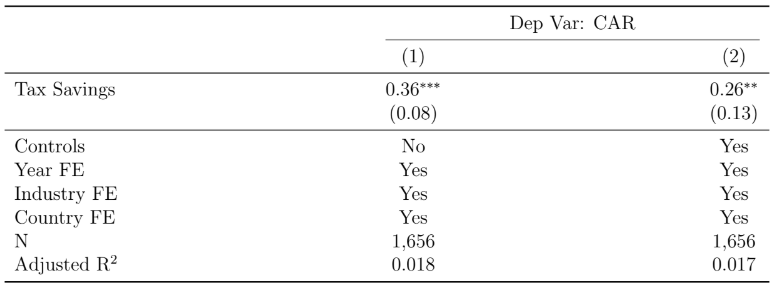
The Tax Benefits of Acquired Versus Organic Tax-Haven Subsidiaries


with Jake Smith and Sorabh Tomar, revise and resubmit, Journal of Accounting Research

Conferences*: 7th IWH-FIN-FIRE Workshop on “Challenges to Financial Stability”, AEA, Annual Meeting of the Swiss Society for Financial Market Research, Cavalcade, China International Conference in Finance, Edinburgh Corporate Finance Conference, EEA, EIASM Conference on Current Research in Taxation, FIRS, Finance, Organizations and Markets (FOM) Conference, National Tax Association, Journal of Law, Finance, and Accounting Conference, MFA, Paris December Finance Meeting, Seventh Annual M&A Research Centre Conference, ZEW Public Finance conference

Abstract [+]Does a firm’s route into a tax haven affect the tax savings generated? For U.S. firms, forming a haven subsidiary via a “haven acquisition” is associated with a 3.8 percentage point reduction in the cash effective tax rate. In contrast, the reduction is 1.4 percentage points when the haven subsidiary is formed organically. Haven acquisitions that generate greater economic substance in tax havens yield larger tax savings. For non-U.S. firms, haven acquisitions reduce the cash effective tax rate more when the home country scores higher on proxies for government quality and the enforcement of securities laws is weaker. M&A announcement returns show that investors price the expected tax savings of haven acquisitions into stock prices, helping to rule out alternative explanations. Overall, our findings suggest that separately considering haven acquisitions is important when analyzing tax minimization strategies involving tax havens.

Did Western CEO Incentives Contribute to China’s Technological Rise?


with Bo Bian.

CEOs of Western firms with high-powered incentive contracts transfer more of their firms’ technologies to China than other CEOs, thereby contributing to China’s technological rise, while harming their firms in the long-run.

Conferences*: 6th Erasmus Corporate Governance Conference, American Law and Economics Association “Junior Scholars Featured Papers Panel”, AFA, Annual Meeting of the Swiss Society for Financial Market Research, Cavalcade Asia-Pacific, CEPR Endless Summer Conference on Financial Intermediation and Corporate Finance, CEPR European Summer Symposium in Financial Markets, China International Conference in Finance, Conference on Financial Economics and Accounting, Finance, Organizations and Markets (FOM) Conference, FMA Napa/Sonoma Conference, GSU CEAR-Finance Conference on Technology, Innovation, and Corporate Finance, Junior Entrepreneurial Finance/Innovation Lunch Group, American Law and Economics Association “Junior Scholars Featured Papers Panel”, Lone Star Symposium, Mannheim Economics Alumni Symposium, MFA, Munich Summer Institute, NBER Chinese Economy, Northeastern University Finance Conference, Paris December Finance Meeting, RCFS Winter Conference, Workshop on Entrepreneurial Finance and Innovation

Abstract [+]China’s quid-pro-quo policy requires foreign multinationals to trade off the short-term benefits of market access and the long-term costs of technology transfer. Do Western CEO incentives affect this trade-off? We document that firms managed by CEOs with high-powered incentive contracts form more partnerships with China and transfer more technology there. These firms subsequently lose R&D human capital to China and face more patenting competition from China, suggesting negative long-term consequences. We provide evidence consistent with the myopia-inducing property of high-powered CEO incentives. The paper highlights an important real effect of CEO incentives and a novel channel behind China’s technological catch-up.

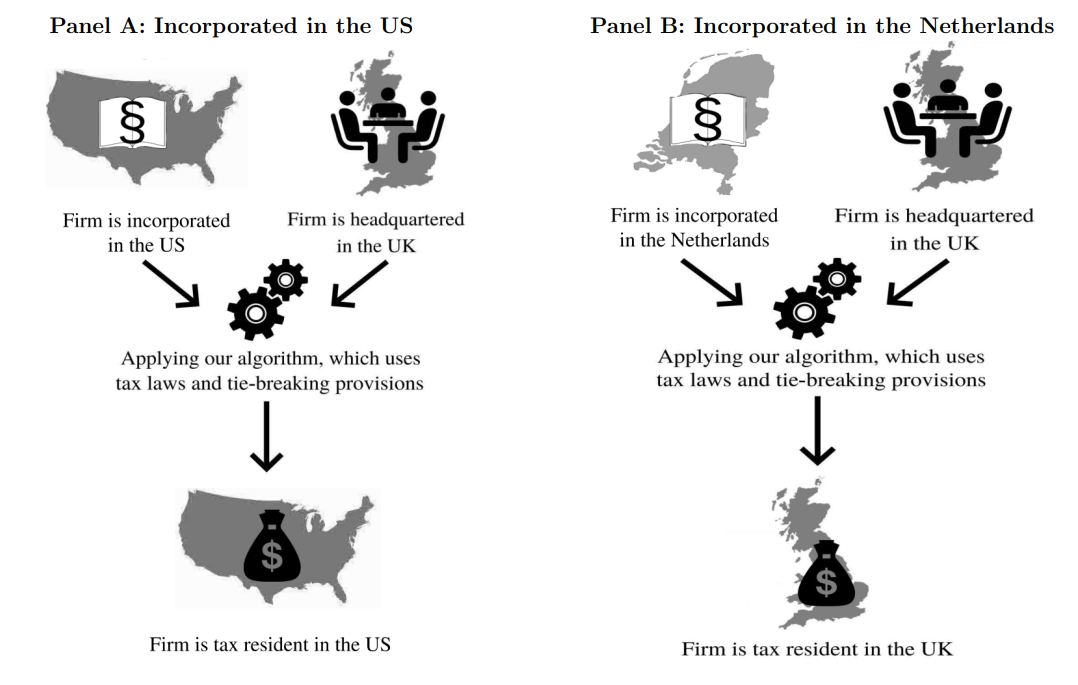
Improving the Measurement of Tax Residence: Implications for Research on Corporate Taxation


with Jake Smith.

We develop a tax residence algorithm and provide quantitative evidence on its importance in many frequently examined settings in corporate taxation.

Award: Best Paper in Corporate Finance at SFS Cavalcade North America

Grants: International Tax Policy Forum

Conferences*: Annual Congress of the International Institute of Public Finance, Cavalcade, EIASM Conference on Current Research in Taxation, Finance, Organizations and Markets (FOM) Conference, Financial Markets and Corporate Governance Conference, National Tax Association Annual Conference,“The division of corporate tax revenue in a globalized world” by Max Planck Institute for Tax Law and Public Finance

Abstract [+]We propose an improved measurement of a key data item in corporate tax research, a firm’s tax residence. Prior research uses one of three proxies, which are in conflict with tax laws around the world. We use a novel algorithm that embeds the residency laws of 150 countries over 20 years to accurately assign tax residence and reassign a considerable fraction of firms relative to standard proxies. We provide evidence from two applications that reassignment significantly affects inferences. For instance, 20.7% of cross-border mergers and acquisitions involve an acquiror or target that is reassigned. Reassigned firms are systematically different from other firms along several dimensions, including effective tax rates.

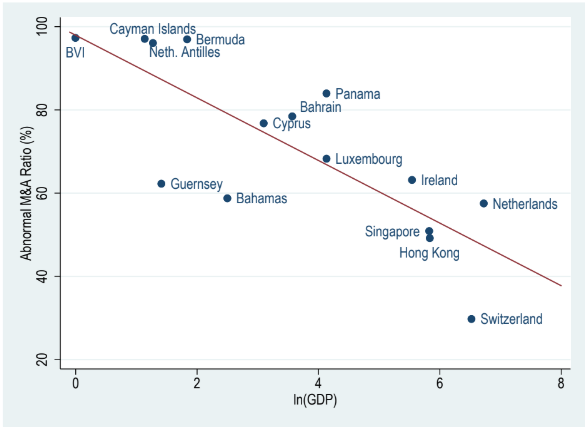
The Outsized Role of Tax Havens in Mergers and Acquisitions


with Jake Smith and Christoph Schneider.

We investigate the 20,360 cross-border, tax-haven mergers and acquisitions (M&A) from 1990 to 2023, which total $8.3 trillion in deal value, or 29.7% of cross-border M&A volume or 11.1% of all M&A activity.

Conferences*: Aarhus Finance Forum, DGF, International Institute of Public Finance, Mannheim Taxation Conference, European Finance Association, National Tax Association, Northern Finance Association

Abstract [+]Using two novel datasets and a more comprehensive sample, we document a new stylized fact: tax havens play a major role in mergers and acquisitions (M&A). Cross-border M&A involving either an acquiror or a target from a haven accounts for 29.7% of cross-border M&A volume, or 11.1% of all M&A activity. We investigate 20,360 such transactions from 1990 to 2023, valued at $8.3 trillion. $4.6 of the $8.3 trillion is classified as “abnormal” activity based on a gravity model with economic fundamentals. Small havens alone account for $2.4 trillion, or 8.5% of cross-border M&A volume (e.g., Bermuda, the Cayman Islands).

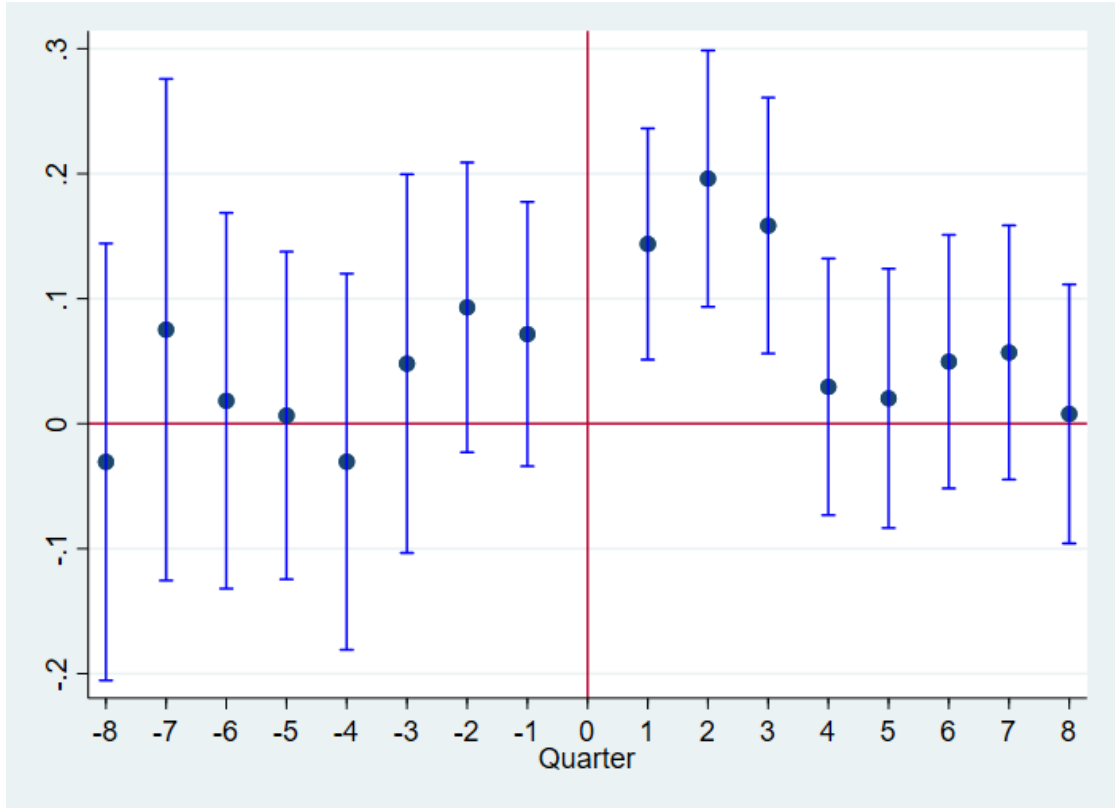
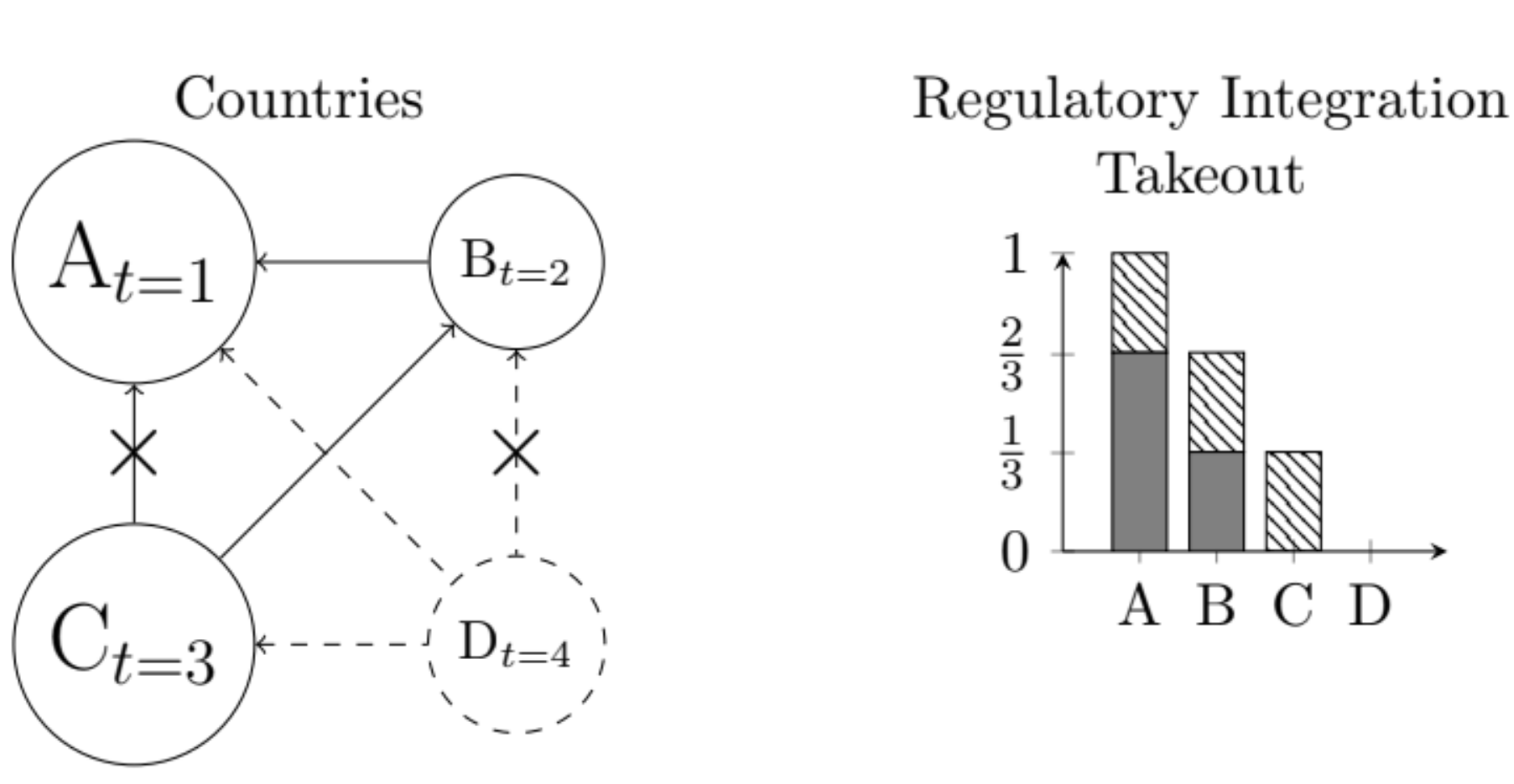
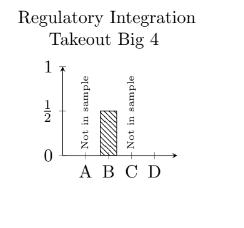
Regulatory Integration of International Capital Markets

Regulatory integration of international capital markets causes large increases in external financing, investment and employment.

Awards:
-Klaus Liebscher Award by the Austrian Central Bank
-Josseph de la Vega Prize (Second Place) by the Federation of European Securities Exchanges
-European Central Bank’s Young Economist Award (Finalist)
-AQR Fellowship Award (Second Place)

Conferences*: Conference on “Banks, Systemic Risk, Measurement and Mitigation” (co-organised by RFS), Global Issues in Accounting Conference (organised by Chicago Booth), AEA, AFA, Barcelona GSE Summer Forum (Financial Intermediation and Risk workshop), Chicago Financial Institutions Conference, China International Conference in Finance, Christmas Meeting of German Economists Abroad, Conference on Capital Markets Union, European Winter Finance Summit, Federal Reserve Bank of Dallas Banking and Finance Workshop, MFA, NFA, North American Summer Meeting of the Econometric Society, 6th Financial Market Symposium, Public Authority and Finance: What is the Relevant Scale and Scope of Deregulation and Re-Regulation?.

Abstract [+] I examine the financial and real effects of regulatory integration of international capital markets using a unique policy plan by the European Union, which creates a common European market for financial services and capital, through, e.g., passporting rights. For identification, I exploit the bilateral and staggered nature of laws that are passed at the European level but are implemented by national governments. Over its implementation, regulatory integration leads to large increases in external financing, investment and employment for publicly listed firms. These results highlight the importance of regulatory integration of international capital markets for firms’ financing decisions and real outcomes.

The COVID-19 Bailouts


Published as a pre-print in Covid Economics, Issue 83, 2 July 2021

with Jake Smith.

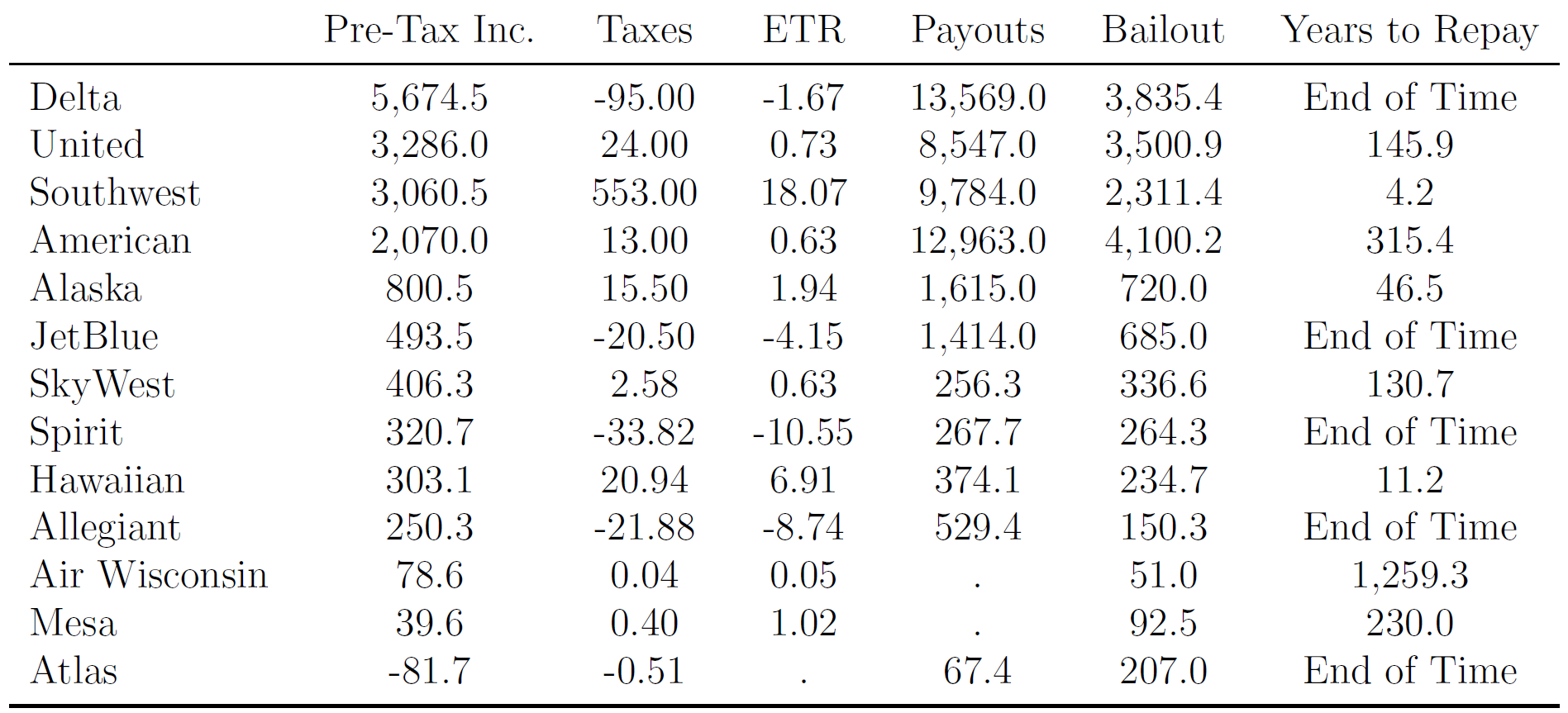
The COVID-19 bailouts are a windfall for many firms, and are expensive compared to past corporate income tax payments of the bailout firms.

Conferences*: AEA

Abstract [+]We use hand-collected data to investigate the COVID-19 bailouts for all publicly listed US firms. The median tax rate is 4% for bailout firms and 16% for no-bailout firms. The bailouts are expensive when compared to past corporate income tax payments of the bailout firms. We compute the number of years a bailout recipient has to pay corporate income tax to generate as much tax revenue as it received in bailouts: 135.0 years for the Paycheck Protection Program and 267.9 years for the airline bailouts. We also document a dark side of the bailouts. For many firms, the bailouts appear to be a windfall. Numerous bailout recipients made risky financial decisions, so bailing them out might induce moral hazard. Moreover, lobbying expenditures positively predict the bailout likelihood and amount.


* including scheduled conferences

How to pronounce my first name – link